Understanding our impact...
Suse and I decided to go for a hot chocolate. It was Saturday, the sun was out, it was a fairly low tide, and we both just wanted to chill for a bit. We drove up the road to Watergate Bay and decided that we would take a stroll along the beach before indulging ourselves at The Beach Hut.
If you have never been to Watergate Bay, we highly recommend it. Watergate is a stunning beach with 2 miles of golden sand from end to end when the tide is out. There are some dramatic cliffs (please observe from a distance as some are prone to collapse!), decent surf, and a cracking view of Newquay in the distance.
We set off from The Warrior of the Surf, an imposing 15 foot sculpture depicting a surfer looking out at the waves created by Cornish artist Richard Austin in 2018 and made from recycled milk bottles (ironic considering what is to follow!), towards the north end of the beach at Watergate.
We weren't walking very long before our gentle stroll suddenly turned into something more. It started with one piece. Quite a large piece of plastic that I saw floating in the water as the smaller waves at the limit of the sea ebbed back to the ocean. I picked it up.
Not much further down, we saw another piece. Suse collected that one. This was not what we had intended. It was supposed to be a nice, romantic walk along the beach in the sunshine.
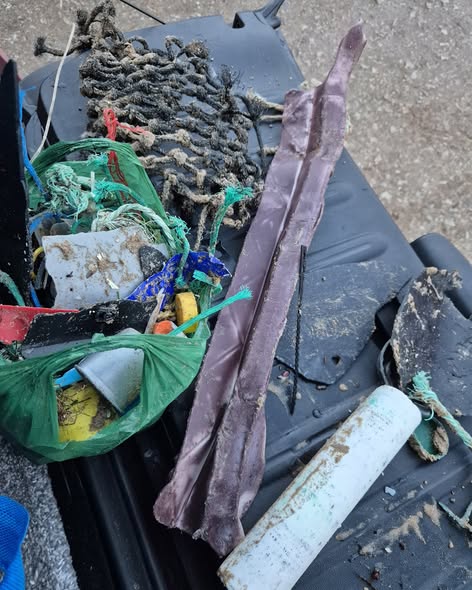
We managed to scrounge a poo bag from a dog walker to put our "treasure" in, but as we walked further up the beach, it was clear that this was not going to be sufficient! We continued on, collecting random pieces of detritus as we went, and trying to keep them contained in what little we had. (Mental note - always take a decent bag to the beach!)
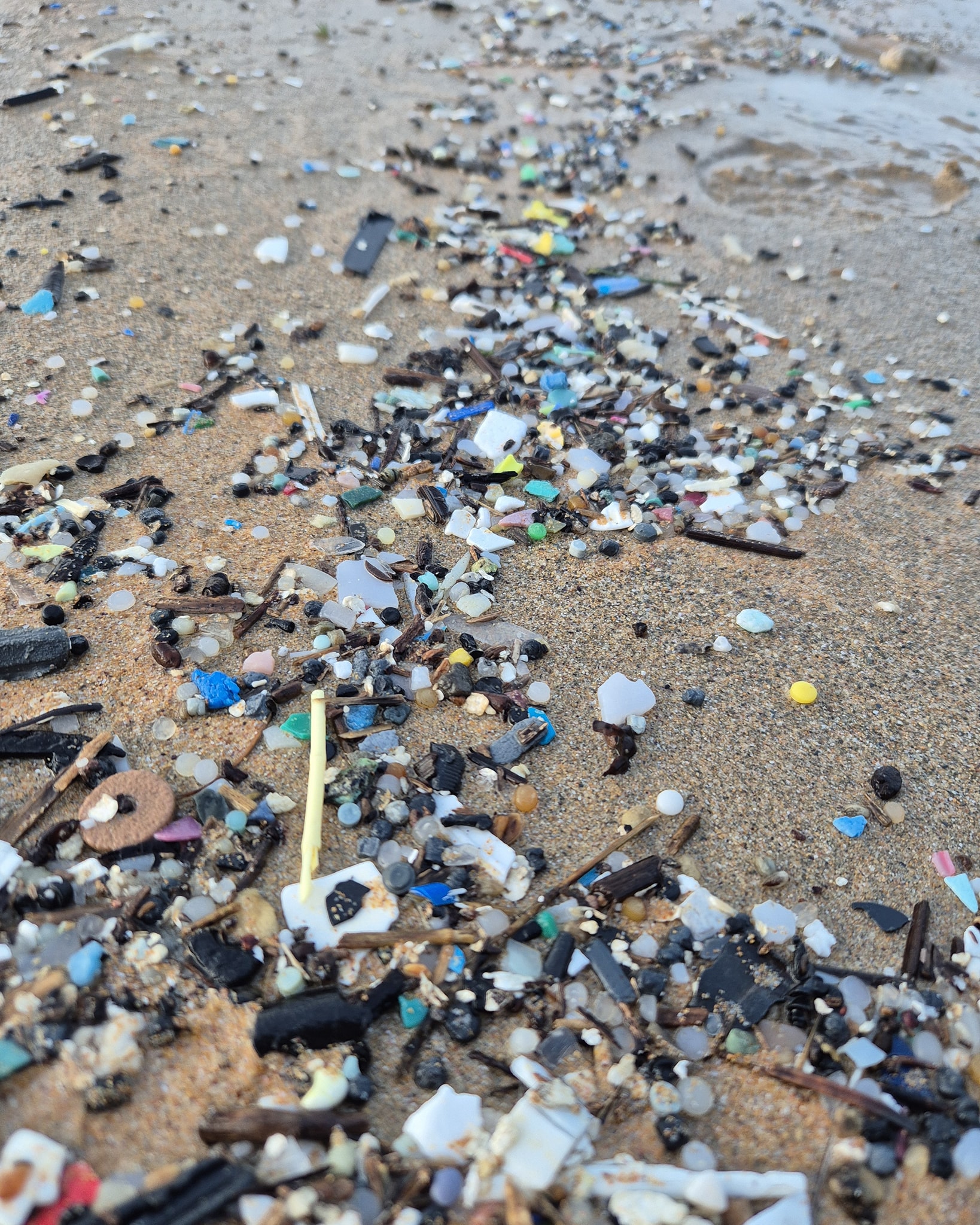
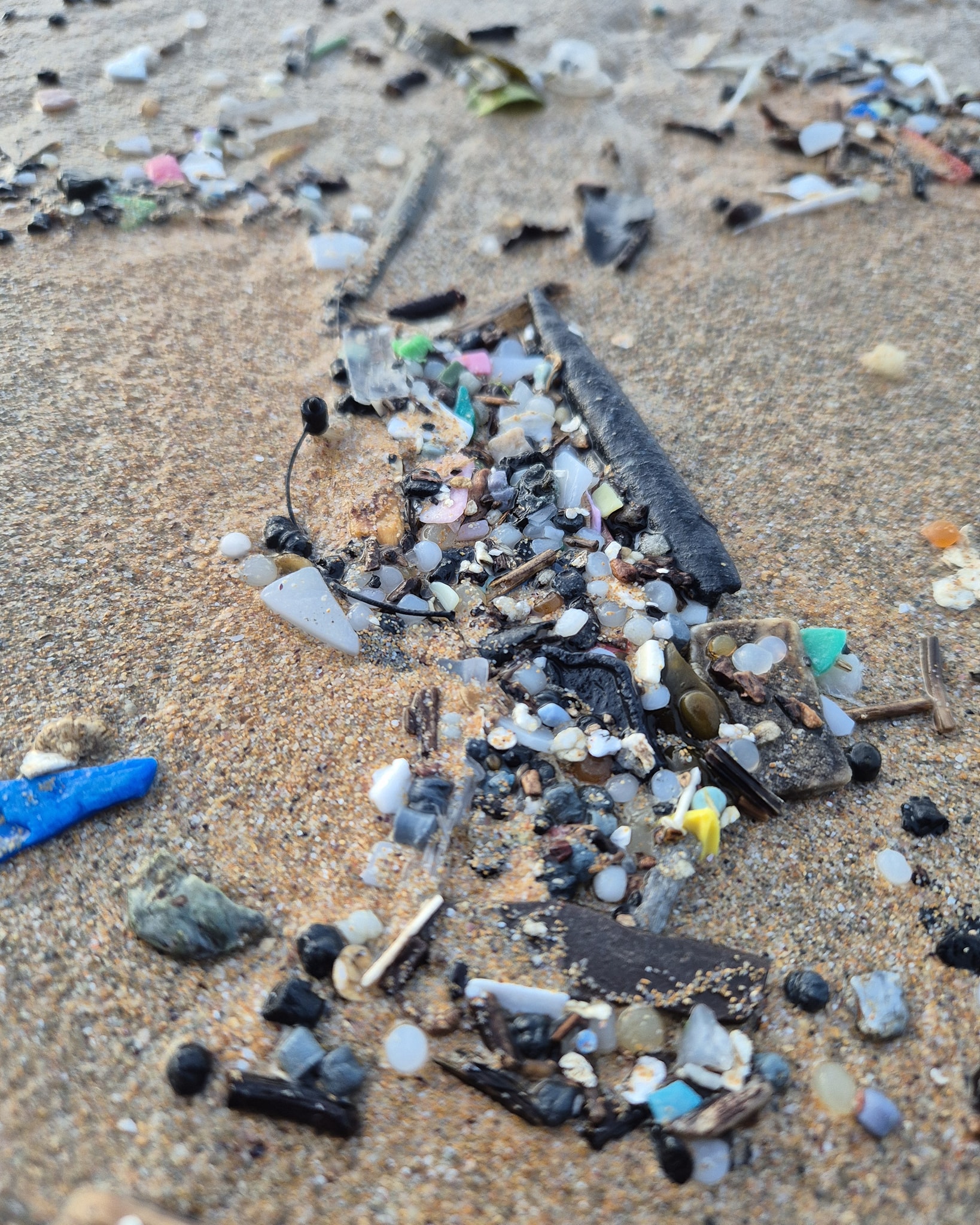
In a little over 40 minutes, we collected over a kilo of plastic waste, from "Ghost Gear" - old, broken fishing equipment, to milk bottle tops and even a tampon applicator! Whilst this in itself is somewhat disturbing, it doesn't really hold a candle to the problem we were not equipped (or prepared) for: